Tweet
  Home | Blog | About | Videos | Contact Home | Blog | About | Videos | Contact
|
|
The
Star Larvae Hypothesis 
Nature's Plan for Humankind
Epilog
Epilog: The Meaning of Purpose
To spare humankind the hell of a technocratic fundamentalist hive, humanism needs to mount a postmodern revolution—a revolution that rejects the alienation of plotless history. The star larvae hypothesis lays the foundation for such an essential revolution.
The interdisciplinary science known as complexity theory purports to explain the development and maintenance of many things, including such far-flung phenomena as biological cells, industrial economies, and spiral galaxies.
These complex phenomena all exhibit spontaneous self organization, according to complexity theory. By subsuming such diverse phenomena, complexity theory exorcises uniqueness from biological life. It relegates biology to an undistinguished place in the broad class of complex phenomena. It makes "being alive" a suspect or wholly generic designation. Nonetheless, most complexity theorists probably would disavow the notion that the Milky Way galaxy, for example, lives—even though, as with biological organisms, its dynamic stability is a product of spontaneous self-organization. Are stars alive? Astronomers tell us that stars are born—metaphorically. But what would distinguish a metaphorical stellar birth from a literal one?
So, when is a complex, self-organizing system alive and when isn't it?
By absorbing living organisms into the broad category of complex, self-organizing systems, complexity theory challenges science to re-categorize biological processes. Biological organisms might be particularized expressions, in protoplasm, of universal processes that operate as readily outside of biology as within it. There's no a priori reason, from the point of view of complexity theory, to suppose that biological organisms operate in any particularly unique way that distinguishes them in essence from industrial economies, planetary biospheres, or spiral galaxies.
—R. Buckminster Fuller
No
More Secondhand God 
If a subset of the broad class of complex, self-organizing systems behaves in a certain way, then the whole class might be expected to behave in similar ways. After all, an underlying premise of complexity theory is that complex systems are as alike in their governing dynamics as they can be diverse in their material constituents. Consequently, if one type of complex system manages its affairs in a particular way, other complex systems are likely to manage their affairs in corresponding ways, owing to their shared principles of organization and control. If birds do it, and bees do it, then, according to complexity theory, solar systems and galaxies probably do it, too.
Among the biological processes that potentially characterize complex nonbiological, self-organizing systems, development, or ontogeny, promises to be the most troubling for the philosophy of science. This is because ontogeny invites to the party that persona non grata of science, teleology. If complex systems in general develop through phases or stages teleologically, that is, with a determinate end inhering in their processes of development, then science cannot dismiss the star larvae hypothesis solely on the grounds of its teleological aspect.
In the jargon
of postmodernism, the star larvae hypothesis presents a "grand
narrative." It regards history as not just a storyline, but one that follows a plot. The plot encompasses human history and the natural history
of the Earth's biosphere, and ultimately of the universe, because it positions
all events within a teleological framework. The hypothesis
proposes an affirmative eschatology. For this reason it cannot be rejected
as being anti-religious. Indeed, it rejects the implicit nihilism of modern
science. Edward O. Wilson, founder of sociobiology,
formulates that nihilism concisely in On
Human Nature
"The first dilemma, in a word, is that we have no particular place to go. The species lacks any goal external to its own biological nature. It could be that in the next hundred years humankind will thread the needles of technology and politics, solve the energy and materials crises, avert nuclear war, and control reproduction. The world can at least hope for a stable ecosystem and a well-nourished population. But what then?"
—R. Buckminster Fuller
No
More Secondhand God
The shortsighted professor lets the question hang unanswered. But a human, early in his or her development, observers might notice, isn't satisfied with a stable uterine ecosystem and well-nourished somatic tissues. A healthy fetus eventually will want to leave that situation behind, no matter how cozy, because it must be only a temporary situation. Beyond it, there is work to be done.
Factory Automation and the Manufacturing of Universes
Technological industry, like the toxins that accumulate in the womb, can seem inimical to nature, especially when nature is sentimentalized as a pastoral woodland of bunnies and babbling brooks. Through such a selective lens the smokestacks, strip mines, and strip malls of urban development seem to insult the natural order. Nonetheless, and right-wing politics aside, environmentalism carried to an extreme runs the danger of dysanthropy, a mental illness no doubt common among the planetbound inhabitants of advanced technological societies. Untreated, it can culminate in fantasies of human extinction. But nature can handle humankind's rambunctiousness. Nature is bigger than the schemes of the power elite. Human industry serves nature's aims. Humankind's seemingly endless inventiveness advances nature's plan. What else but hubris could suggest that human accomplishment lies somehow outside of nature?
—Charles Hartshorne
The
Logic of Perfection
Only a mind alienated from nature in the first place could fragment nature into dumb, dead, deterministic stuff on the one hand and human minds that can act in a seemingly magical way outside of the determinism of natural law on the other. In the quotation from Erwin Schroedinger that concludes Quantum Gravity and the Physics of Consciousness the physicist points out that there can be no such dualism, with different laws of nature applying to different situations depending on whether the atoms, of my hand, say, are moved by my will or by an outside intervention. Products of mind are as much products of nature as are Earth's flora and fauna.
Admittedly, Earth cannot host an indefinite expansion of human industry. Her carrying capacity, like that of a womb, is finite. For that reason, civilization needs eventually to break its terrestrial bonds. Only when future generations free themselves from the constraints of this planet will they be able to fulfill biology's calling.
In line with economic striving for efficiency, the doing of more with less, the industrial program would seem to want to satisfy itself by doing everything with nothing. The Big Bang cosmology proposes that universes break into existence ex nihilo—from nothing—the perfection of factory automation. In its craving to maximize growth and efficiency, industry is driven, finally, to manufacture new universes. This formulation of a cosmic destiny for humankind’s descendants coincides on an even larger scale with the theory of cosmological natural selection within a multiverse of universes.
That theory explains the precise tunings of the universe’s physical constants—tunings that make biological organisms and their environments possible—by proposing that the tunings evolved through many generations of universes, the evolution being driven by a natural selection that favors universes that are profligate star producers. But a universe whose physics is tuned to spawn stars coincidentally has a physics tuned to spawn biology. Given this dual result of cosmological natural selection, evolutionary pressures might actually be favoring universes able to turn the (presumed) coincidence to their advantage—able to apply biology to star building.
—R. Buckminster Fuller
No
More Secondhand God
Also struck
by the seeming coincidence, James Gardner has proposed in two books (Biocosm
and The
Intelligent Universe
—Marshall
McLuhan
Take
Today: The Executive as Dropout
To dismiss biological life as a nonentity in the cosmic drama is surely to sell nature short. Only an anti-serendipitous prejudice would conclude that, though stars and biological organisms require the same tunings of the universe’s physical constants, organisms are irrelevant or only incidental to the process of cosmological selection. But that is what science has concluded with its anti-teleological doctrines. Fortunately, religion stands as an antidote to this bias.
The Soul of Evolution
The religious intuition of "something greater" uplifts the soul. But the mind has had to content itself with imagining that the greater something can be enjoyed only after death or only following an apocalypse. Now these interpretations can be recast as metaphors for future stages of natural history. Industrial technology enables biological organisms to ascend to the heavens literally, where objects are weightless and minds are supersentient.
As McLuhan observed, anything pushed sufficiently to its extreme will invert into its opposite, and so it is with the rationalist, empiricist program of science, which became formalized, at least in part, in opposition to religious authority. Now, with twenty-first century technologies and concepts in hand, science circles back to outmaneuver religion in the pursuit of Heaven. The prospect of humankind constructing a heavenly niche and while occupying it metamorphosing into a society of angels constitutes a secular last-laugh at the expense of scriptural literalists.
Probably
few scientists would welcome a proposed historiography in which science
serves to implement a religious blueprint. But science has evolved its own sense of the sacrosanct. The heirs of the Enlightenment
have allowed the humanistic ideals that they inherited to decay into
a dogma of materialism and theophobia, complete with canonical scriptures
and the excommunication of heretics. As historian of science Thomas
Kuhn points out in The
Structure of Scientific Revolutions
 |
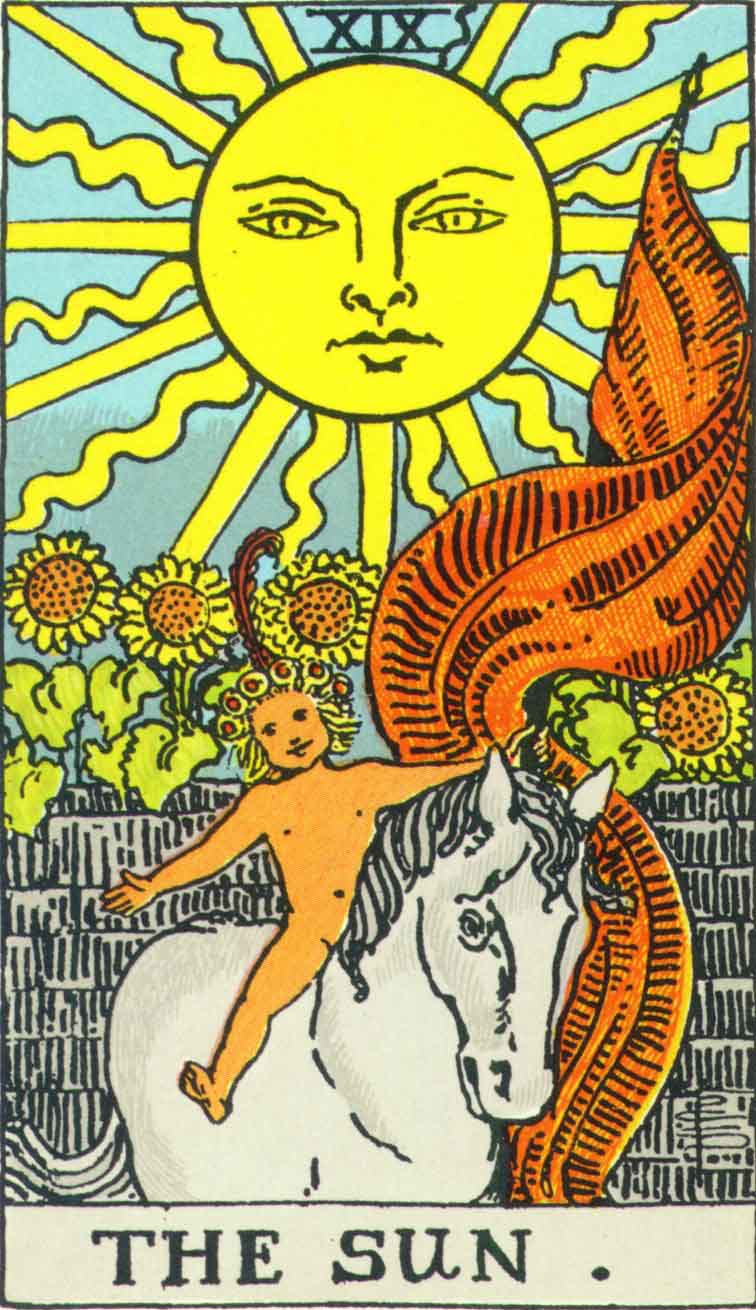
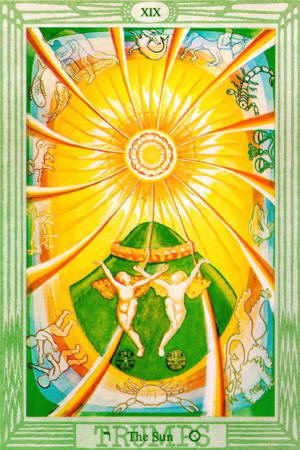
Released from the unconscious, premonitions of space colonization take fantastic, often religious, forms.
The Feast of the Gods, by Cornelis van Poelenburgh |
This is an unfortunate development. But more unfortunate is the failing of science and secular society to produce a natural theology. It perhaps was inevitable that, without a theological base, the liberated worldview that the Enlightenment hatched would run its course, and religious fundamentalism would reassert itself. Instead of building a better mousetrap, as it were, science and secular society decreed mousetraps unnecessary.
—Richard
Rorty
Is Truth a Goal of Inquiry?
Truth
and Progress: Philosophical Papers Vol. 3

Meanwhile, the mice have overrun the granary—discontented souls told that their existence is a pointless chemical accident have re-embraced the superstitions that the Enlightenment was supposed to vanquish.
Human nature fundamentally remains what it always has been, soul in search of meaning. The soul, the seat of subjectivity, craves an understanding of its situation in terms of meaning and purpose. The contrived "meanings" assigned to it by atheistic humanism or invented by individuals exercising their existential "freedom" constitute a poor man’s, and ultimately a poor, simulation of genuine meaning, or natural purpose. To cite just one sad consequence of this failing, the U.S. public education system in the early years of the twenty-first century confronts the prospect of Biblical Creationism (aka Creation Science, aka Intelligent Design) re-entering the classroom. Somewhere Biblicists might be planning similar attacks on geology using the young-Earth doctrine and on astronomy using a revived geocentrism.
One means by which scientific humanism might recapture disaffected hearts and minds is by appropriating and claiming as its own the promise of transcendence through ascent. Science has the capacity to translate the promises of religion into the promise of human industry. Science need only integrate its most recent discoveries into a coherent model of nature-as-organism. Complexity theory, quantum theories of mind, astrochemistry, and other avant-garde threads of scientific thought can transform the current, mechanistic, model into an organismic one, one that recognizes that the evolution and history of life on Earth serve a natural, cosmic purpose, the regeneration of stars.
The
momentum of history has carried humankind along a path that now diverges
upwardly into Heaven and downwardly into Hell. The ascendant path is one
along which at least some of humankind's descendants can embark and so graduate
to the superhuman state dreamt of in the religious imagination. Human
beings are programmed to metamorphose into angels, weightless and
supersentient, once released from Earth. In space, transfigured,
they will be in a position to advance the project of Creation through
successive cosmic generations. This is the calling of organic life.
But callings can be refused. A future technocratic elite could
relegate humankind to Hell, which might look like the automated tyranny
depicted in the Matrix and similar Hollywood products. A late-term abortion for Gaia could take
the form of the interminably static authoritarian hive. The subsistence of life under the imperial self-serving mechanism
could be the fate of biospheres that fail to release their industrial
energies into space. The universe could be full of festering prison
planets. But Earth need not join their company.
The celestial superhumans of the religious imagination are not metaphysical angels but physical extraterrestrials, our evolutionary descendants.
The world’s scriptures, myths, folklore, fables, and fairy tales reveal the mechanics of the psyche, but only conjoined with science can the mythic imagination function as a navigational instrument for history. Though they obviously have accomplished much of profound importance, science and secular culture have failed to articulate a satisfying natural theology. Casting about, they have articulated useful descriptions, but it's time now to integrate the fruits of that endeavor into a new theology.
Put otherwise, Humanism needs to mount a postmodern revolution. A revolution that dumps science’s superfluous dogmas, those that divorce nature from her creative, animate soul. A revolution that delivers a new model of nature and a new theology—a worldview that respects scientific fact and existential longing, is free of superstition, exercises the soul, and unbinds the spirit. A revolution that rejects the alienation of a plotless history and liberates humankind from the hellish prospect of the technocratic planetbound hive. The star larvae hypothesis points the way toward such an essential revolution.
 |
Star Larvae vs. The Matrix |
Extraterrestrial Salvation vs. Terrestrial Damnation |
"If we can move into an open horizon where we can live in our modern world with ancient dreams that have always stirred us, then our work will have been done." -- Sigurd F. Olson, Open Horizons |

The Star Larvae Hypothesis:
Stars constitute a genus of organism. The stellar life cycle includes a larval phase. Biological life constitutes the larval phase of the stellar life cycle.
Elaboration: The hypothesis presents a teleological model of nature, in which-
Stellar nebula manufacture bacteria and viruses in their interiors as they cool.
-
Biology evolves within an ontogenetic program that in its entirety, on- and off-planet, constitutes a generational life cycle of the stellar organism.
-
Technology plays a necessary role in evolution. It enables biological life to emigrate from planets to weightless space.
-
Postplanetary life manufactures the protons needed to create, then metamorphoses into, new stars.
-
A prescient complex of celestial religious motifs expresses humankind’s stellar calling. The star is the human imago.
-
Nature's metabolism encompasses the organic and the inorganic in a continuum of anabolic and catabolic exchanges.
| Tweets by @Starlarvae | Social Media =
|
| |

Home | Blog | About | Videos | Contact | Text Copyright ©2004-2017 Advanced Theological Systems. All Rights Reserved.
Privacy Statement: We use third-party advertising companies to serve ads when you visit our website. These companies may use information (not including your name, address, email address, or telephone number) about your visits to this and other websites in order to provide advertisements about goods and services of interest to you. If you would like more information about this practice and to know your choices about not having this information used by these companies, visit the Google ad and content network privacy policy.
